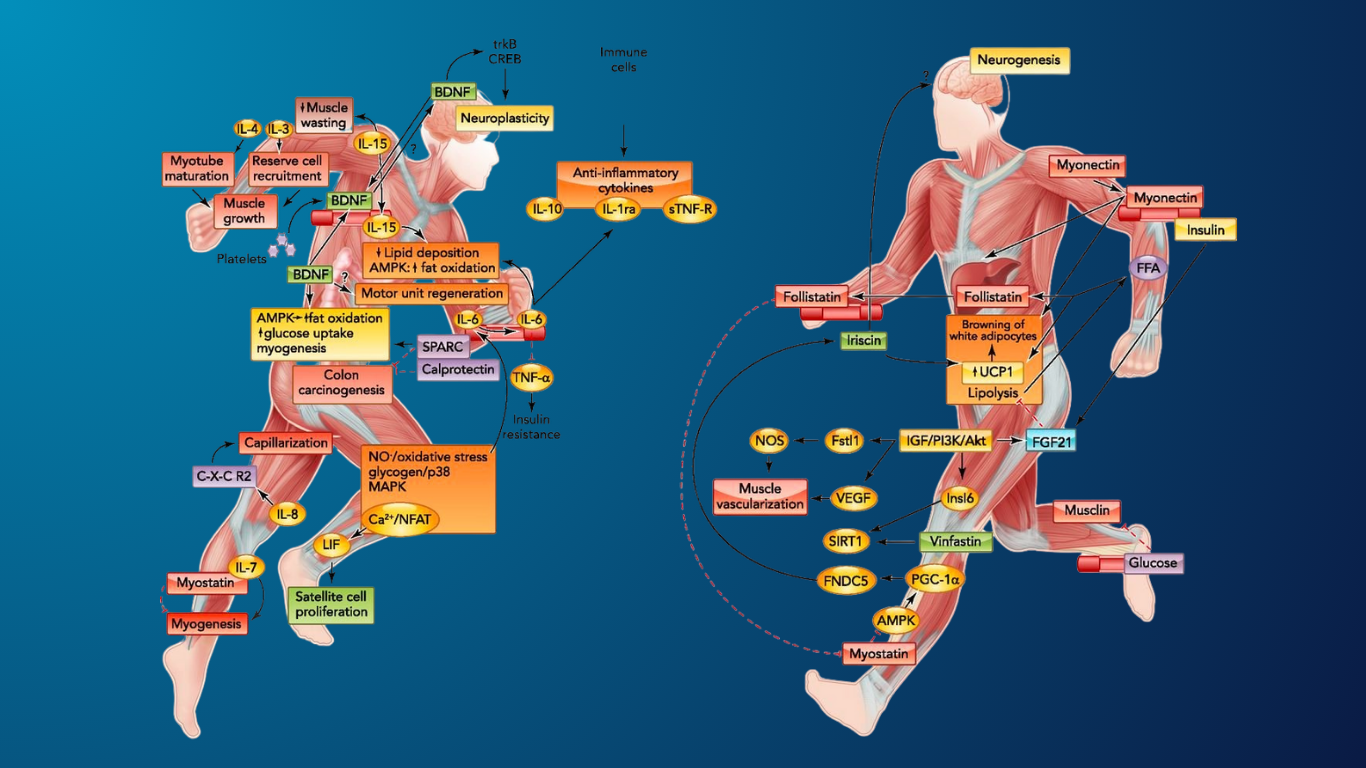
People who maintain higher levels of muscle mass and muscle strength live longer and live better.
Muscle is not simply a structure that moves the skeleton. It is metabolically active tissue, deeply integrated into the systems that govern energy balance, glucose regulation, immune function, cognitive aging, and physiological resilience.
The decline of muscle mass with age—sarcopenia—is not a cosmetic issue. It is a biological turning point, accelerating metabolic dysfunction and increasing vulnerability to the chronic diseases that define modern aging. Preserving and building muscle is not optional for longevity. It is foundational.
Muscle as the Primary Regulator of Glucose and Insulin
After a meal, skeletal muscle becomes the dominant site of glucose uptake in the body. In healthy adults, the majority of post-prandial glucose is cleared by muscle, not the liver or adipose tissue. This makes muscle the central regulator of insulin sensitivity.
When muscle mass and muscle quality are high, glucose is rapidly transported into the muscle cell and stored as glycogen. Blood sugar remains stable, insulin release is modest, and metabolic flexibility is preserved. When muscle declines, this system destabilizes. Glucose lingers longer in circulation, insulin rises more aggressively, and over time the body drifts toward insulin resistance.
This mechanism explains why individuals with higher muscle mass consistently demonstrate: